
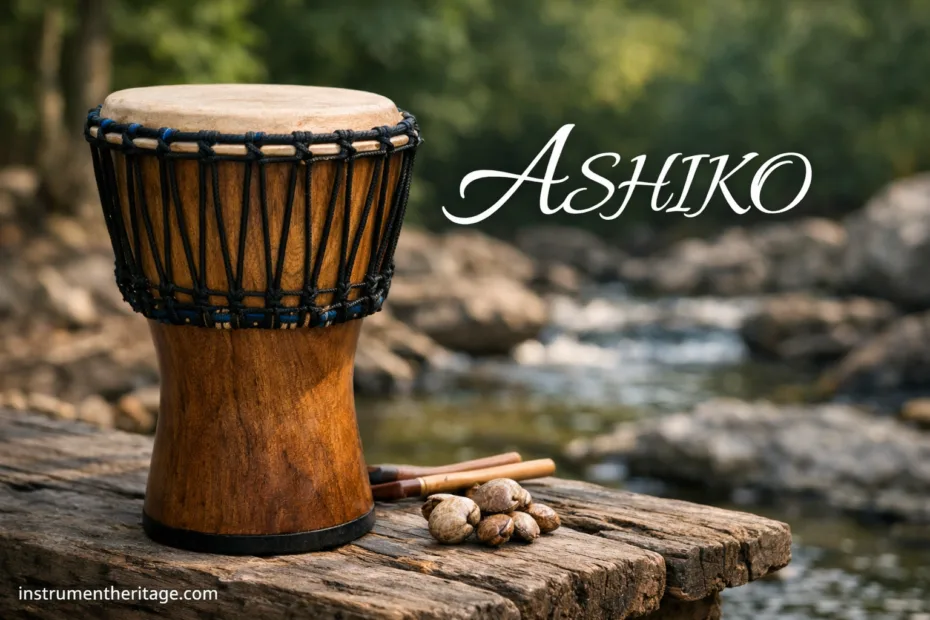
| Aspect | Details |
|---|---|
| Instrument family | Hand-played membranophone; in Hornbostel–Sachs terms, an individual single-skin conical drum Reference-1✅ |
| Recognizable shape | Tall, open-bottom, tapered body with the playing head on the wide end. |
| Cultural home | Most often linked with Yoruba musical culture in West Africa, then carried into wider diasporic percussion life. |
| Usual materials | Hardwood shell, animal-skin head, rope tensioning; modern versions may also use synthetic shells, synthetic heads, or lug tuning. |
| Sound character | A rounded low end, clear open tones, and a very useful middle voice that sits nicely between pulse and phrase. |
| Playing method | Played mainly with bare hands; tone changes a lot with hand angle, finger release, and head tension. |
| Why players like it | It feels direct, earthy, and responsive. The drum speaks fast, but it still has body. |
Ashiko is one of those drums that gets described too quickly. People see the tapered shell, hear one bright slap and one warm bass note, then file it away as “something like a djembe.” That shortcut misses the point. Ashiko has its own build logic, its own touch, and its own musical personality. The body is longer. The air moves differently. The low end does not leap out in the same way a goblet drum does; it rolls forward more gently, while the mids stay alive under the hands. That is a big part of its charm. It does not just boom. It breathes.
- 🥁 Hand drum
- 🪵 Traditionally hardwood
- 🔊 Strong mids
- 🪢 Often rope tuned
- 🌍 Yoruba-linked heritage
What an ashiko actually is 🥁
The ashiko is a single-headed, open-bottom hand drum with a long tapered shell. That shape matters. It is not decoration. It is the reason the drum carries a rounded bass, a dry edge sound, and a center tone that stays present instead of disappearing under the low note.
The easiest way to picture it is this: a djembe feels like a bowl on a stem; a conga feels like a barrel with a waist; an ashiko feels more like a leaning column of air. The body pulls sound downward and outward in a longer path. You hear that the moment you play a simple bass-open-slap phrase. Notes do not pile up in the same place.
One thing worth keeping in mind: ashiko is not best understood as a side character in someone else’s drum family. It stands well on its own. Once you stop comparing it every second, the drum becomes much easier to hear for what it is.
How the drum is built 🪵
An ashiko looks simple until you start studying the parts. Then you realize how much of the voice comes from small choices. Shell wood. Wall thickness. Head diameter. Bottom opening. Bearing edge. Rope path. Ring weight. None of these are tiny details when your hands are the whole sound engine.
- Shell: traditionally a carved wooden body, often cut from a single piece, though many modern drums use staves or molded synthetic shells.
- Head: usually animal skin, with goat skin being especially common; the hide thickness shifts the response from lively and crisp to heavier and drier.
- Rings and rope: a rope-tuned ashiko uses vertical lines of tension and tightening patterns that players often call diamonds or triangles.
- Bearing edge: the top rim where the head meets the shell. A clean, even edge helps tuning settle and keeps tone focused.
- Open foot: the narrow bottom opening releases air, shapes projection, and changes the feel of the bass under the palm.
A modern traditional-style build still often follows the old recipe closely: a rope-tuned shell, solid mahogany, and a natural goatskin head Reference-3✅. On the other side of the fence, stage-friendly models now appear in PVC shells with synthetic heads and top tuning, which makes head changes and pitch adjustment much easier in changing weather Reference-4✅.
What changes when one part changes
- Thinner hide usually feels quicker, brighter, and easier to articulate.
- Thicker hide often gives more body and less splash on the edge.
- Heavier shell walls can make the drum feel grounded, sometimes a little drier.
- Lighter shells often answer fast, though they may feel less dense under the low note.
- A smaller bottom opening can keep the voice tighter; a wider opening often lets the bass spread more freely.
Why the shape sounds like this 🔊
This is where many short write-ups stop too early. They say “deep bass and crisp highs” and move on. Fair enough, but that does not tell your hands what the drum is doing.
The ashiko’s taper changes the way air pushes back against the head. A goblet drum throws a lot of energy from a compact chamber. An ashiko stretches that energy through a longer body. The result is a bass note that can feel less explosive but more rounded, plus open tones with a woody center that stays useful in ensemble playing. That middle area matters. It is often the reason an ashiko sits so nicely under singing, bells, shakers, or another hand drum.
The drum also rewards a slightly patient touch. Hit too hard and you flatten the voice. Relax the hand, let the head rebound, and the sound opens. It is a bit like speaking into a room instead of shouting into a wall. Same energy. Better result.
- Head tension sets the basic pitch map and how fast the slap jumps out.
- Shell profile shapes the low-end bloom and how much midrange the drum keeps.
- Bottom opening controls how the air escapes and how broad the bass feels.
- Skin thickness changes the balance between sparkle, warmth, and hand comfort.
The overlooked part: ashiko often shines not because it is louder than everything else, but because its mid voice keeps rhythm clear. In a mixed percussion setting, that can be more useful than pure volume.
History, movement, and musical family 🌍
The ashiko is most often tied to Yoruba drumming culture in West Africa. That link matters because it keeps the drum connected to a real musical home rather than treating it as a generic “African drum.” And once you follow that path, the ashiko stops looking like a random cone and starts looking like a shaped response to community music-making, dance support, hand technique, and carved-wood instrument design.
You can also trace related silhouettes and ideas across Afro-diasporic percussion in the Caribbean and the Americas. That does not mean every similar drum is the same instrument with a new name. It means families of shape, touch, and musical use traveled, adapted, and kept speaking in new places. The ashiko belongs in that conversation.
In the United States, the drum reached far more ears through the work of Babatunde Olatunji. His official biography notes that he rose to prominence in the late 1950s, and that Drums of Passion, released in 1959, became a major hit and introduced many Americans to African-rooted percussion listening Reference-2✅. That wider exposure shaped how later players encountered ashiko, even when they first met it in classes, circles, or stage percussion setups rather than in a traditional setting.
That history also explains a small but important confusion: a lot of people learned the ashiko after they already knew djembe, conga, or bongo language. So they described it through those drums. Useful at first. Not enough for long.
How players pull sound from it ✋
An ashiko usually answers to the same broad hand-drum family of strokes—bass, open tone, slap—but it does not reward exactly the same hand habits as every other drum. The shell is taller, the rebound can feel different, and the best sound often comes from a hand that stays relaxed a split second longer than you expect.
Common stroke colors
- Bass: center hit with a loose palm for a rounded, low voice.
- Open tone: near-edge strike with quick release and a clean ring.
- Slap: sharper edge contact, often brighter and drier than players expect.
- Muted touch: useful for pulse, ghosted support, and phrasing.
What experienced players notice
- The drum likes angle; tiny hand changes alter color fast.
- Over-tight heads can make the voice thin.
- Loose tuning gives comfort but can blur the phrase.
- A good ashiko often carries a sweet spot where the mids wake up.
Posture matters too. Many players hold the drum between the knees or tilt it forward so the bottom opening can breathe. If you choke the foot against the floor or block too much of the opening, the low note changes immediately. You hear less body. The drum tells you right away.
That is part of what makes ashiko satisfying. The instrument gives honest feedback. Not rude. Just honest.
Ashiko beside djembe, conga, and talking drum 🔗
| Instrument | Body shape | Main voice | Typical feel under the hands | What often gets confused |
|---|---|---|---|---|
| Ashiko | Tall tapered shell, open bottom | Warm bass, lively mids, focused edge | Responsive, slightly stretched low end, clear middle register | Often reduced to “djembe-like,” even though the voice and balance are different |
| Djembe | Goblet-shaped shell | Strong contrast between bass, tone, and slap | Fast attack, punchy projection, dramatic dynamic spread | Players assume every rope-tuned skin drum behaves this way |
| Conga | Barrel form with a taller cylindrical feel | Round sustained tones, singing open notes | Smooth rebound, strong open tones, often more sustain | Ashiko is sometimes treated like a conga with a narrower foot, which misses the cone effect |
| Talking drum family | Usually hourglass-shaped with pressure cords | Pitch-bending voice | Technique depends on squeeze and pressure control | Shared Yoruba context can make people assume the drums serve the same musical role |
The cleanest way to hear the ashiko is not to ask which famous drum it resembles most. Ask instead where its own sweet spot lives. On a good ashiko, that spot sits where pulse, tone, and hand comfort meet. That is why the drum can carry an ensemble quietly and still feel full.
Details that separate a lively ashiko from a dull one
- The bearing edge must be even. If it is rough or warped, tuning fights back and the tone gets patchy.
- The shell should not be all thickness and no flex. Too heavy can make the drum feel sleepy. Too thin can make it papery.
- The bottom opening should match the drum’s size. A mismatched foot can make the bass either pinched or floppy.
- The hide should suit the drum, not just look rustic. Hair, thickness, and stretch all change response.
- The tension path must be clean. Rope systems that bind badly may tune up, but they rarely feel pleasant.
- The shell profile matters more than surface carving. Decoration catches the eye; geometry shapes the voice.
- Best short description
- A hand drum with a conical body, open foot, and a voice that leans into warmth and midrange clarity.
- Best way to understand its sound
- Think less “big boom” and more “rounded bass plus articulate center.”
- Best way to judge one in person
- Play soft first. A good ashiko should still speak when you do not force it.
Ashiko FAQ
Is ashiko the same thing as a djembe?
No. They are both hand drums with skin heads, but the shell shape, low-end behavior, midrange balance, and playing feel are different. The ashiko usually gives a longer, rounder low note and a very useful middle voice.
Why is the bottom open?
The open foot lets air move out of the shell and helps shape projection, bass response, and playing feel. Block that opening too much and the drum changes immediately.
What skin is most common on an ashiko?
Goat skin is very common. It gives a lively response and a clear top end. Some drums use other natural hides, and modern stage models may use synthetic heads for stability.
Can a beginner start on ashiko?
Yes. It is a friendly drum for learning hand control because it gives quick feedback. A well-tuned head and comfortable playing height make a big difference.
Does rope tuning change the sound compared with lugs?
It can. Rope-tuned drums often feel a little more organic under the hands, while lug-tuned models make fast adjustment easier. The shell, head, and build quality still matter more than the tuning hardware alone.
What should I listen for in a good ashiko?
Listen for an easy low note, a clean open tone, and a middle register that stays clear at soft volume. If the drum only wakes up when you hit hard, it is usually hiding a weak setup.
