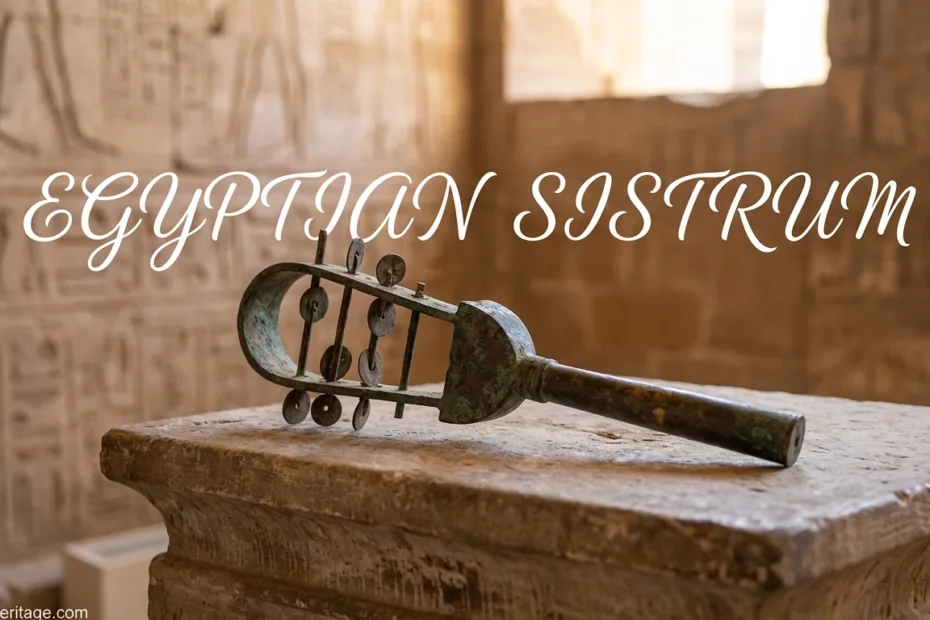
Imagine standing in the cool, dimly lit hall of an ancient temple in Thebes. The air is thick with incense, and suddenly, a rhythmic, metallic rustling cuts through the silence. It sounds like the wind rushing through a papyrus thicket. This is not just music; it is a divine signal. The Egyptian Sistrum was more than a mere percussion instrument; it was a sacred tool, a conduit to the gods, and a symbol of cosmic balance.
While we often think of drums and flutes when imagining ancient music, the sistrum held a unique position of power. It was primarily played by women of high status, specifically priestesses, to appease deities like Hathor and Bastet. Its jingling sound was believed to dispel negative energy and ward off the chaotic influence of the storm god, Seth.
Today, this instrument offers us a fascinating window into the metallurgical skills, religious practices, and musical landscape of the ancient world. It is a survivor, bridging the gap between the age of the Pharaohs and modern Coptic liturgical traditions.
| Instrument Family | Percussion (Idiophone) |
| Ancient Egyptian Name | Sesheshet (onomatopoeic) or Sekhem |
| Hornbostel-Sachs Classification | 112.13 (Vessel rattles / Sliding rattles) |
| Primary Materials | Bronze, Brass, Copper, Faience, Wood (rarely), Clay |
| Key Associated Deities | Hathor, Isis, Bastet, Sekhmet |
| Sound Character | Jingling, hissing, metallic rustle (white noise spectrum) |
| Modern Usage | Coptic Orthodox Church, Ethiopian Orthodox Tewahedo Church |
| Origins | Old Kingdom Egypt (approx. 2600 BCE) |
The Anatomy of a Divine Rattle
To understand the sistrum, you have to look past the idea of a simple “shaker.” It is an engineering marvel designed to create a specific acoustic texture. Unlike a maraca which contains loose beads inside a closed shell, the sistrum uses a sliding rattle mechanism.
The structure is relatively consistent. It consists of a handle and a U-shaped or temple-shaped metal frame. Crossing this frame are horizontal metal crossbars (rods). The magic happens with the metal disks or sometimes loose loops threaded onto these rods. When the player shakes the handle, these disks slide back and forth, striking the frame and each other.
The volume and tone depended heavily on the size of the frame and the number of disks. A larger bronze sistrum would produce a commanding, bright clash, while smaller faience models might produce a softer, more delicate tinkle.
Two Distinct Forms: Naos and Sekhem
Archaeologists and musicologists generally categorize ancient Egyptian sistra into two distinct shapes. These weren’t just aesthetic choices; they carried different symbolic weights and histories.
1. The Naos (Sesheshet)
This form is shaped like a shrine or temple. The top of the instrument often features the head of Hathor, with cow ears, supporting a small architectural structure (the Naos). It is often more elaborate and was frequently associated with high temple rituals. The onomatopoeic name “Sesheshet” mimics the whispering sound it creates.
2. The Sekhem (Arched)
This is the “horseshoe” shape. It resembles the horns of a cow, directly linking it to bovine deities. The word “Sekhem” implies power or might. This version is structurally stronger and likely produced a louder, more forceful sound, suitable for processions and large gatherings.
While the Sekhem type looks more like a modern tool, the Naos type is a masterpiece of iconography. Holding a Naos sistrum was like holding a miniature temple in your hand. The vibration generated by the shaking was thought to energize the god residing within the temple imagery.
Hathor: The Lady of the Sistrum
You cannot separate the instrument from the goddess. Hathor, the deity of joy, motherhood, love, and music, is the primary patron of the sistrum. In iconography, she is almost always depicted holding one. But why?
The ancient Egyptians believed that the world was in constant danger of falling back into Nun (primordial chaos) or being overtaken by silence and darkness. The sound of the sistrum was life-affirming. It was a sonic representation of creation and movement.
- Pacifying the Angry Goddess: Mythologies tell of the “Eye of Ra” (often Sekhmet or Tefnut) becoming enraged. The gentle, rhythmic shaking of the sistrum was used to soothe these fierce goddesses, transforming them back into the benevolent Hathor.
- Driving Away Seth: Seth, the god of storms and disorder, loathed the sound of the sistrum. Therefore, priests and priestesses would shake them vigorously to repel evil spirits and protect the sanctity of the ritual space.
- The Symbol of Life: The shape of the loop (in the Sekhem variety) resembles the Ankh, the symbol of life.
Interestingly, the sistrum wasn’t just for women, though they were the primary players. High priests and even the Pharaoh would be depicted offering sistra to the gods, signifying their role in maintaining Ma’at (cosmic order).Reference✅
Materials and Metallurgy
The choice of material for a sistrum was never accidental. While we find votive (non-functional) models made of fragile faience or wood in tombs, the performance instruments were metallic.
- Bronze and Copper
- The most common materials. Copper was associated with Hathor (often called the “Lady of Malachite” or “Lady of Copper”). The metal’s resonance was important for cutting through the ambient noise of a busy temple complex.
- Alabaster and Faience
- These were often used for ceremonial, non-musical sistra. A faience sistrum is too fragile for vigorous shaking but served as a symbolic offering in burial chambers to ensure the deceased had access to music in the afterlife.
- Precious Metals
- Royal sistra were occasionally crafted from gold or silver. These would have produced a distinct, pure tone, reserved for the most sacred inner sanctums of the temples.
The crossbars were usually movable. In some surviving examples, the rods are shaped like snakes or urae, adding another layer of protective symbolism. The jingling disks were sometimes engraved, turning the entire object into a text to be read as well as heard.
From Ancient Thebes to Modern Churches
One of the most remarkable aspects of the Egyptian sistrum is that it never truly disappeared. When the pagan temples closed and Christianity took root in Egypt, the instrument was adapted rather than abandoned.
In the Coptic Orthodox Church and the Ethiopian Orthodox Tewahedo Church, the sistrum (often called a senasel or tsanatsel in Ethiopia) remains a vital part of the liturgy. The design has evolved slightly, but the fundamental principle—metal disks sliding on rods within a frame—remains identical.
The instrument also found its way to Rome. As the cult of Isis spread across the Mediterranean, the sistrum went with it. Roman wall paintings and statues frequently depict priests of Isis shaking the rattle, proving its appeal transcended cultural borders.
The Egyptian sistrum serves as a reminder that in the ancient world, music was rarely just for entertainment. It was a technology of the sacred—a way to speak to gods, calm storms, and ensure the sun rose the next morning. When we look at these artifacts in museums today, we are looking at silent machines that once kept the universe running.
Frequently Asked Questions
Yes. While the ancient Egyptian religion has faded, the sistrum survives in the Coptic Orthodox Church of Egypt and the Ethiopian Orthodox Tewahedo Church. It is used to accompany sacred chants and dances (debtera) during religious services.
It produces a metallic jingling, hissing, or rustling sound. It lacks a definite pitch and is considered an instrument of indefinite pitch (idiophone). The sound is often compared to water cascading or wind blowing through reeds.
It was primarily a female instrument, played by high-ranking priestesses, queens, and noblewomen known as “Sistrum Players of Amun/Hathor.” However, Pharaohs and high priests are also depicted using them in specific rituals to appease the gods.
Hathor is the goddess of music, joy, and dance. The sistrum was her sacred symbol. Placing her face on the handle or frame invoked her presence, and the sound was believed to please her and pacify her potentially destructive alter-ego, Sekhmet.Reference✅
