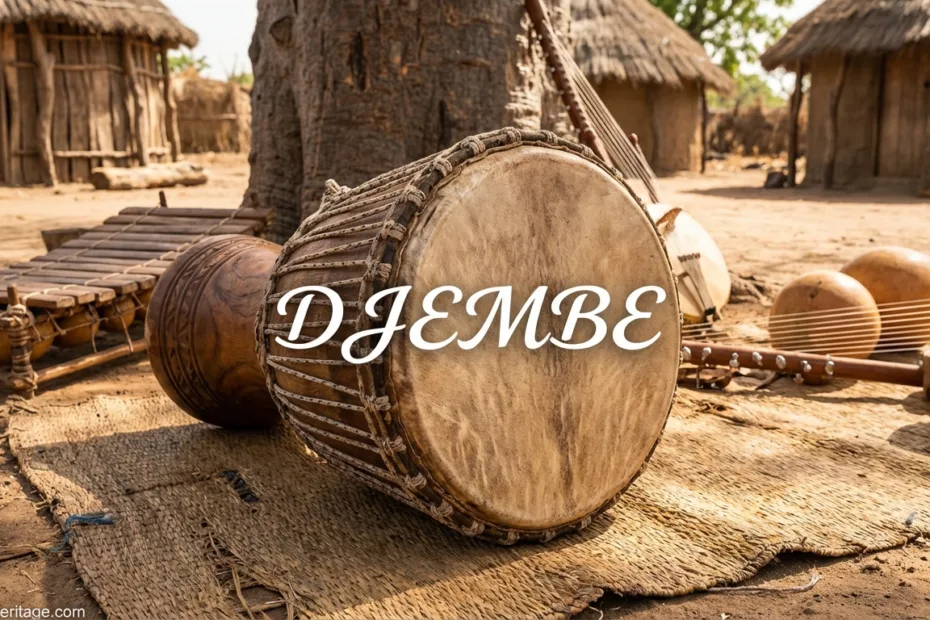
| Instrument Name | Djembe (also spelled Jembe, Jenbe, Djimbe) |
| Classification | Membranophone, Goblet Drum, Hand Percussion |
| Place of Origin | West Africa (Mali, Guinea, Ivory Coast, Burkina Faso) |
| Cultural Origin | Mandingue Empire (approx. 12th Century), Numu Blacksmith Caste |
| Primary Materials | Hardwood shell (Lenke, Iroko, Mahogany), Goatskin head, Low-stretch rope (polyester) |
| Tuning System | Mali Weave (Rope tension system using knots) |
| Frequency Range | Deep Bass (60-100 Hz) to High Slaps (1 kHz+) |
| Playing Technique | Bare hands (Bass, Tone, Slap) |
| Traditional Accompaniment | Dunun drums (Dununba, Sangban, Kenkeni) |
| Notable Masters (Djembefolas) | Mamady Keïta, Famoudou Konaté, Babatunde Olatunji |
Imagine an instrument that can summon a village, heal the sick, and make you move your feet before your brain even registers the beat. That is the Djembe. It is not just a drum; it is a historian made of wood and skin. Originating from the heart of the Mandingue Empire in West Africa, this goblet-shaped powerhouse has conquered the globe, becoming perhaps the most popular African drum in existence. It is loud, it is dynamic, and it possesses a tonal range that rivals a full drum kit.
You might see them in modern drum circles or professional stage setups, but the Djembe’s roots are deep, spiritual, and incredibly complex. It is capable of speaking a language that transcends words. Whether you are a curious beginner or a seasoned percussionist, understanding the Djembe requires looking past the surface and diving into the craftsmanship, the physics, and the centuries-old traditions that keep this drum beating.
Explore the Djembe
The Spirit of the Mandingue: Origins and History
The story of the Djembe takes us back to the 12th century, to the vast and wealthy Mali Empire. This was a time when the empire spanned across modern-day Mali, Guinea, Senegal, and other parts of West Africa. The drum is intrinsically linked to the Numu, a caste of blacksmiths among the Mandinka people. These artisans were not just metalworkers; they were the guardians of spiritual powers, carving the Djembe shells from solid tree trunks while performing specific rituals to appease the spirits of the trees.
There is a popular saying in the Bamana language: “Anke djé, anke bé.” This translates roughly to “Everyone gather together in peace.” It is widely believed that the word “Djembe” comes from the contraction of “Djé” (gather) and “Bé” (peace).
Historically, the Djembe was never played alone. It was—and still is—a tool for communication. It signaled everything from warnings of danger to the celebration of a harvest. Different rhythms were composed for specific events: weddings, baptisms, funerals, and farming activities. The Djembefola (the player) held a high status in society, acting as a storyteller who kept the oral history of the tribe alive through rhythm. Unlike western music which often focuses on melody, Mandingue music focuses on polyrhythm, where the Djembe interacts with the Dunun (bass drums) to create a dense tapestry of sound.
The global spread of the instrument began largely in the 1950s and 60s, when national ballets like Les Ballets Africains of Guinea began touring the world. Masters like Mamady Keïta and Famoudou Konaté later established schools in Europe and America, standardizing the pedagogy and introducing the instrument to a global audience. Reference✅
The Shell: Sacred Woods and Acoustics
A Djembe is not just a piece of wood; it is a sculpture designed for acoustic perfection. The shape is distinct: a goblet structure consisting of a bowl (the resonance chamber) and a stem (the sound projection tube). The interior is hollowed out, traditionally by hand using an adze (a curved blade). This interior shape is important; smooth interiors reflect sound sharply, while rougher interiors (often found in high-quality drums) create a drier, more complex timbre.
Preferred Wood Types
The density of the wood defines the drum’s projection and clarity. Traditional makers prefer hardwoods that are incredibly dense and resistant to termites.
- Lenke (Afzelia africana): Considered the spiritual wood for the Djembe. It is golden to reddish-brown and offers a perfect balance of projection and warmth. It is highly prized and protected in some regions.
- Iroko (Milicia excelsa): Known as “African Teak.” It is extremely durable and rot-resistant. Iroko drums are heavy and produce a very powerful, resonant bass.
- Djala (Khaya / Mahogany): A very dense, heavy wood with a dark red color. It produces a bright, loud sound with a sharp slap, favored by soloists who need to cut through the noise of a large ensemble.
- Melina wood: A softer, lighter wood often used for beginner drums or tourist models. While easier to carry, it lacks the acoustic depth and volume of the hardwoods.
The Membrane and Tension System
The soul of the Djembe lies in its head. Traditionally, this is raw goatskin from West African goats. These goats have adapted to harsh climates, resulting in skins that are thinner but tougher with less fat content than their European or American counterparts. This specific density allows for the crisp, high-pitched slaps that the Djembe is famous for. Cow skin is occasionally used for a warmer, mellower sound, but it is rare on a standard lead Djembe.
The Evolution of Rope
In the past, skins were attached using wooden pegs or strips of rawhide. Today, the standard is the Mali Weave system using high-quality synthetic rope.
🧵 Rope Specifications for Quality
If you are looking at a Djembe, the rope matters. Professional drums use pre-stretched polyester rope (often climbing grade) with a braided core.
Why it matters: Nylon stretches too much, making tuning a nightmare. You want a rope that is 4mm to 5mm thick, static (low stretch), and abrasion-resistant. The number of vertical ropes (verticals) also indicates quality; a professional shell typically has between 30 to 36 verticals to ensure even tension distribution across the skin.
The metal rings (loops) that hold the rope are wrapped in colorful fabric, often matching the rope or the aesthetic of the drum. This isn’t just decoration; it prevents the metal from rusting and cutting into the rope.
The Physics: Helmholtz Resonance
Why is the Djembe so loud? The physics behind it is fascinating. The drum acts as a Helmholtz Resonator. When you strike the center of the skin, you displace a volume of air into the bowl. This air is compressed and forced down through the narrow throat into the stem.
The air mass in the stem vibrates against the “springiness” of the air in the bowl. Because the stem is open at the bottom, this vibration projects outward. The ratio between the bowl volume and the stem width is calculated precisely by master carvers to maximize bass resonance while ensuring the high frequencies (slaps) don’t get muddied. Reference✅
Furthermore, the tension of the skin is incredibly high compared to other hand drums like congas. This high tension, combined with the hard edge of the wood, facilitates the production of harmonic overtones, which creates that piercing “crack” sound of a slap.
The Language of Hands: Three Primary Sounds
Playing the Djembe is not about hitting it hard; it is about technique and relaxation. There are three fundamental sounds that form the “alphabet” of Djembe music. If you can’t distinguish these three, you aren’t speaking the language clearly.
- 1. The Bass (Gun / Dun)
- The heartbeat. Played with the full palm in the center of the drum. Your hand should rebound immediately, like touching a hot stove, to let the skin vibrate fully. It is a deep, booming low frequency.
- 2. The Tone (Go / Do)
- The medium pitch. Played on the rim with the fingers held together and flat. You strike the edge, but exclude the thumb to protect it. The sound is round, wooden, and melodic without the high-pitched ring.
- 3. The Slap (Pa / Ta)
- The signature sound. This is the hardest to master. It is high-pitched, sharp, and aggressive. Played on the rim like the tone, but with the fingers slightly relaxed and open. The idea is to let the fingertips whip onto the head, creating a cracking sound that cuts through the air.
The posture is equally important. Traditionally, the drum is held between the legs, tilted forward slightly to allow the sound to escape the bottom. If the bottom is flat on the ground, the bass is killed (stifled). In modern standing performance, a strap is used to sling the drum over the shoulders, allowing the player to dance while playing.
Tuning and Maintenance: The Mali Weave
A Djembe is a living thing. The skin reacts to humidity and temperature. In damp weather, the skin loosens and the pitch drops. In dry heat, it tightens. To maintain the crisp sound, you must master the Mali Weave.
This is a method of tuning where the excess vertical rope is woven horizontally through the vertical pairs. By creating a “diamond” pattern and pulling the knot tight, you leverage the verticals against each other, effectively shortening the rope and pulling the rings down. This increases tension on the skin.
- Avoid Heat: Never leave a tuned Djembe in a hot car or direct sunlight. The skin can dry out and split instantly under high tension.
- Moisturizing: Some players use a tiny amount of shea butter (Karité) on their hands, which naturally transfers to the skin, keeping it supple. However, avoid oiling the skin directly and excessively, as it can deaden the sound.
- Detuning: If you are traveling to a very different climate (e.g., from humid to dry), it is wise to slightly detune the drum to prevent the skin from snapping during transit.
The Djembe in Global Music
Today, you will find the Djembe in contexts far removed from the village ceremonies of Guinea. It has been adopted by rock bands, jazz ensembles, and music therapists. Its portability and volume make it the ultimate “campfire instrument.”
However, purists and cultural preservers emphasize the importance of acknowledging the source. The rhythms traditionally played—such as Soli (initiation rite), Kuku (fishing celebration), or Djaa (seduction dance)—carry specific meanings. Playing the drum without understanding these rhythms is like speaking words without knowing their definitions. While free improvisation is beautiful, the respect for the lineage adds a depth to the playing that cannot be replicated.
When buying a Djembe, check the weight. A good hardwood drum (12-13 inch head) should weigh between 7kg to 12kg. If it feels light as a feather, it is likely soft wood and won’t hold the sound well.
Frequently Asked Questions
Is a synthetic Djembe better than a wood one?
It depends on the use case. Synthetic drums (fiberglass/plastic) are weatherproof, lighter, and easier to tune (often using hardware keys). They are great for touring or schools. However, they generally lack the warmth, complexity, and spiritual connection of a traditional wooden shell with natural goatskin. For authentic sound, wood is superior.
How often do I need to replace the skin?
With proper care, a quality goatskin can last several years. It usually breaks due to physical trauma (being dropped), over-tightening in dry heat, or natural fatigue from heavy playing. If you play professionally every day, you might change it annually. Hobbyists might go 5-10 years on one skin.
What size Djembe should I buy?
For an average adult, a drum with a 12 to 13-inch playing surface (head diameter) and about 24 inches in height is standard. Anything smaller than 10 inches is usually considered a travel drum or for children, as it cannot produce a full bass response.
Can I play the Djembe with sticks?
Generally, no. The goatskin is thin and under high tension; drumsticks can easily puncture or dent it. The Djembe is designed for the soft tissue of the human hand. However, there are thin, specialized rattan sticks used in some fusion contexts, but traditional technique is strictly bare-handed.
