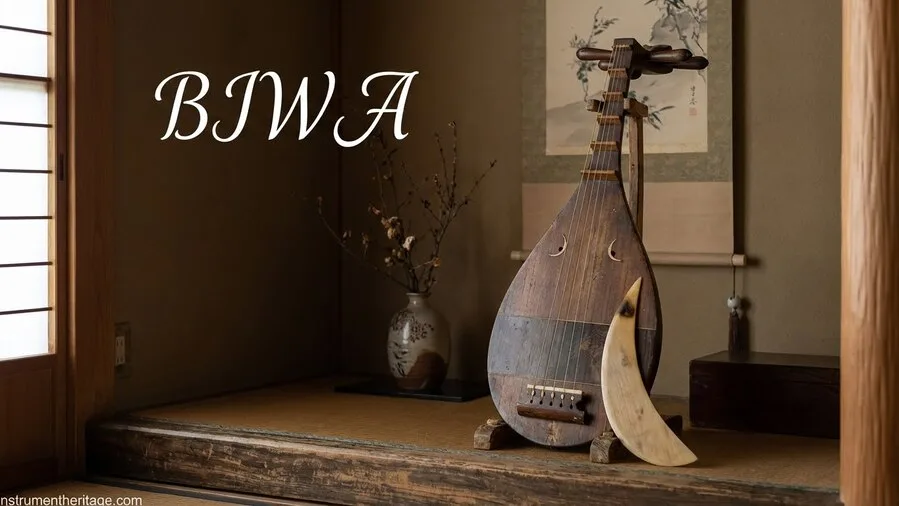
Imagine a sound that is less about the melody and more about the silence between the notes. The Biwa isn’t just an instrument; it is a musical time machine that transports you to the misty battlefields of feudal Japan. Unlike the guitar, which sings, the Biwa speaks, growls, and snaps. It is the chosen vessel for epic tales of samurai glory and tragic loss, a short-necked fretted lute that has defined the sonic landscape of Japanese storytelling for over a millennium. When you hear the percussive strike of the large plectrum (bachi) hitting the soundboard, you aren’t just hearing music; you are hearing the heartbeat of history itself.
From the Silk Road to the Imperial Court
The journey of the Biwa is a fascinating tale of cultural migration. It didn’t start in Japan. Its ancestor is the Persian Barbat, which traveled along the Silk Road, evolving into the Chinese Pipa before finally crossing the sea to Japan around the 7th or 8th century (Nara Period). While the Chinese Pipa evolved to become more melodic and virtuosic, the Japanese Biwa took a different path, becoming deeper, more percussive, and ritualistic.
In the early days, specifically within the Gagaku (Imperial Court Music) ensembles, the instrument was known as the Gaku-biwa. It was a rhythm keeper, a stately presence among flutes and drums. You can still see beautifully preserved examples of these ancient instruments in the Shosoin Repository in Nara, some featuring exquisite mother-of-pearl inlays that rival modern jewelry.
The Biwa Hōshi: Chronicles of the Heike
Here is where the story gets truly cinematic. The Biwa’s most iconic role wasn’t in the shiny courts of emperors, but on the dusty roads with the Biwa Hōshi (blind priests). These wandering performers used the instrument to accompany the recitation of the Heike Monogatari (The Tale of the Heike), an epic account of the Genpei War between the Taira and Minamoto clans.
💡 The Sound of Battle
The music of the Biwa Hōshi wasn’t meant to be “pretty.” It was designed to evoke emotion and atmosphere. The harsh strumming could mimic the clashing of swords, the galloping of horses, or the eerie quiet of a haunted battlefield.
This tradition turned the Biwa into a spiritual tool. The monks believed that reciting these tales would pacify the vengeful spirits of the fallen warriors. It wasn’t just entertainment; it was a musical exorcism. This narrative style is known as Katarimono (narrative music), distinct from pure instrumental music. Reference✅
Anatomy of the Lute: Wood and Silk
To understand the sound, you have to look at the build. The Biwa is constructed primarily from Paulownia wood (for the front) and hard Mulberry wood (for the back), giving it a resonance that is both warm and sharp. But there are two features that make it totally unique compared to Western lutes.
Key Components of the Biwa
- 1. The Bachi (Plectrum)
- This isn’t a tiny guitar pick. The Bachi is a large, fan-shaped triangular wedge, often made of very hard wood like boxwood. It is so large that players often strike the soundboard simultaneously with the strings, creating a percussion effect that defines the genre.
- 2. The Sawari (The Buzz)
- If a guitar buzzes, you fix it. If a Biwa buzzes, it’s perfect. The Sawari is a deliberate design where the strings vibrate against the frets or the neck to create a complex, buzzing timbre. This noise mimics the cicadas of summer or the impermanence of nature, adding a layer of sonic texture called “noise” in Western music, but “beauty” in Japanese aesthetics.
Not All Biwas Are Created Equal
Just as there are acoustic and electric guitars, there are several types of Biwa, each evolved for a specific social class or musical purpose. The transition from the calm court music to the aggressive samurai music changed the instrument’s shape and sound.
| Type | Primary Use | Character & Tone | Player Class |
|---|---|---|---|
| Gaku-biwa | Gagaku (Court Music) | Rhythmic, steady, and ensemble-focused. Large and heavy. | Aristocrats / Court Musicians |
| Heike-biwa | Reciting epics | Smaller, designed for travel. Used for chanting religious texts. | Blind Monks (Biwa Hōshi) |
| Satsuma-biwa | Samurai training | Explosive, dramatic, and loud. High sawari effect. | Warrior Class (Samurai) |
| Chikuzen-biwa | Storytelling / Women’s play | Melodic, softer, often used by female performers in the Meiji era. | Professional Storytellers |
The Satsuma-biwa is particularly famous for its connection to the Samurai of the Satsuma domain. They used it to cultivate mental fortitude. The strikes on this instrument are often violent and decisive, mirroring the stroke of a katana. Reference✅
The Art of Ma (Negative Space)
Playing the Biwa is not about playing as many notes as possible. It is heavily influenced by the Japanese concept of Ma (negative space). After a powerful strike of the strings, the player will often let the sound decay into total silence before the next phrase. This silence is heavy; it carries the weight of the story being told.
In modern times, composers like Toru Takemitsu brought the Biwa onto the global stage with orchestral works like November Steps, proving that this ancient “storytelling box” can hold its own against a full Western orchestra. The instrument demands patience from the listener, asking them to slow down and listen to the texture of a single note rather than a complex chord progression.
Frequently Asked Questions
What is the difference between a Biwa and a Shamisen?
While both are Japanese plucked string instruments, the Biwa is a short-necked lute with a pear-shaped body and is generally larger. The Shamisen has a long, thin neck and a small, square body covered in skin (like a banjo). The Biwa is older and historically associated with court music and samurai storytellers, while the Shamisen became popular later in theater (Kabuki/Bunraku).
Is the Biwa difficult to play?
Yes, it is considered quite challenging. The large plectrum (bachi) requires a specific technique to strike both the string and the body simultaneously. Additionally, many Biwa types have high frets, requiring the player to press down firmly to change pitch, allowing for subtle tonal bends similar to a sitar.
Why does the Biwa sound buzzy?
The buzzing sound is intentional and is called Sawari. It is created by the design of the nut or the frets, allowing the open strings to vibrate slightly against the wood. This adds complexity and sustain to the note, a quality highly valued in traditional Japanese aesthetics.
